Workshop Recap
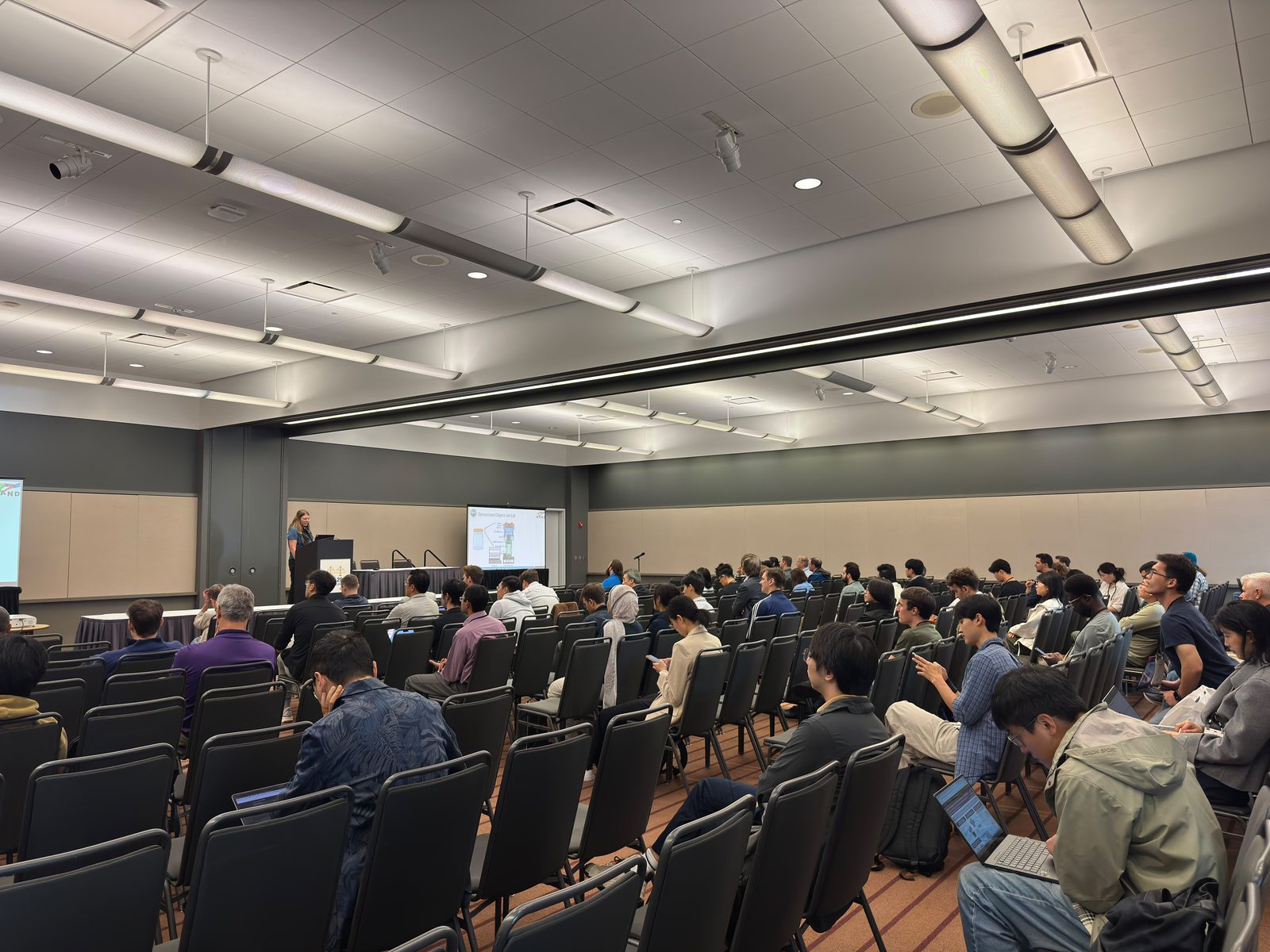
A full room for haptics and dexterous manipulation
Thank you to everyone who joined us. Here is a look back at the morning: five keynotes, a round table with all of our speakers, and a busy poster session.
The Keynotes
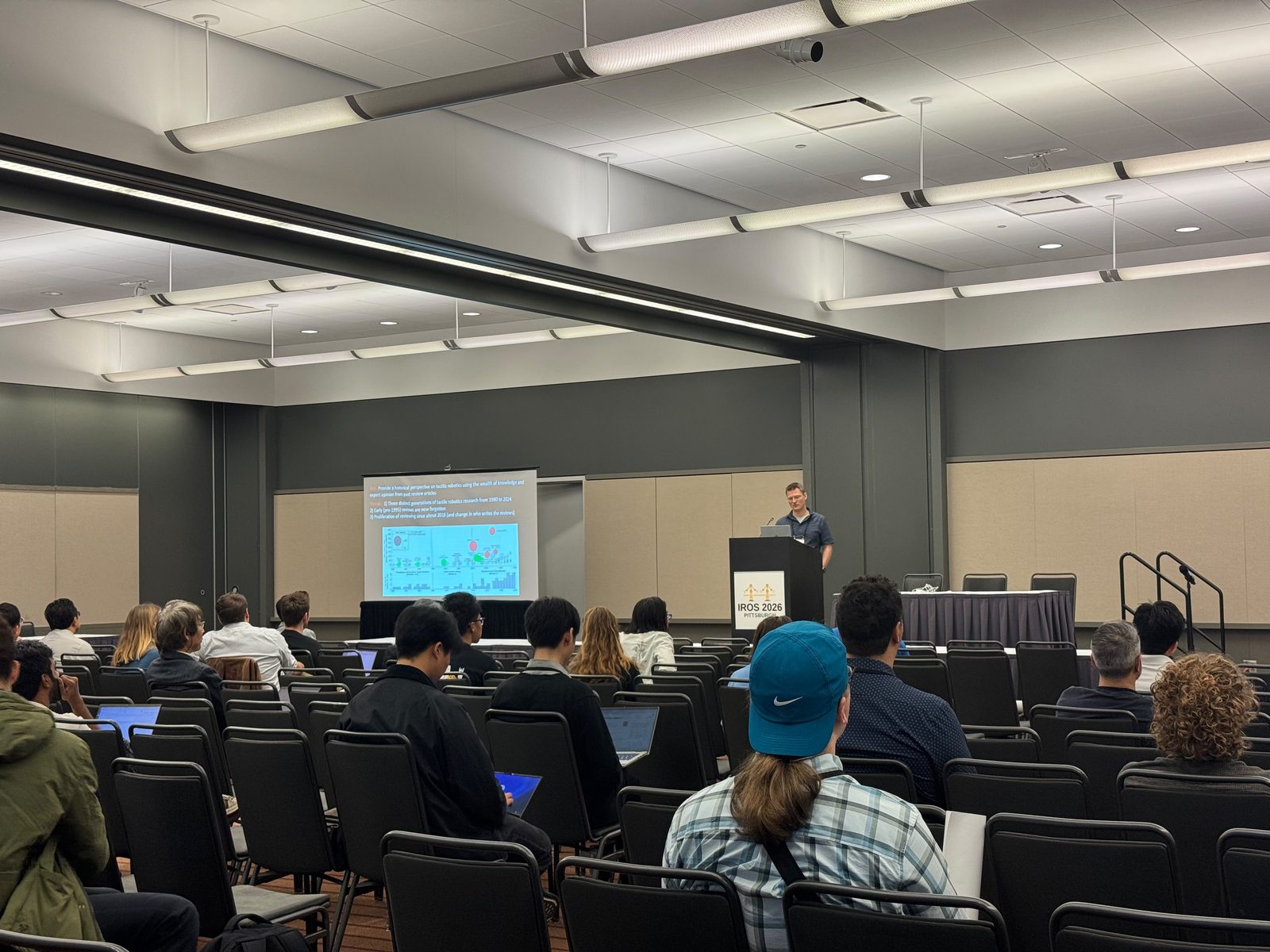
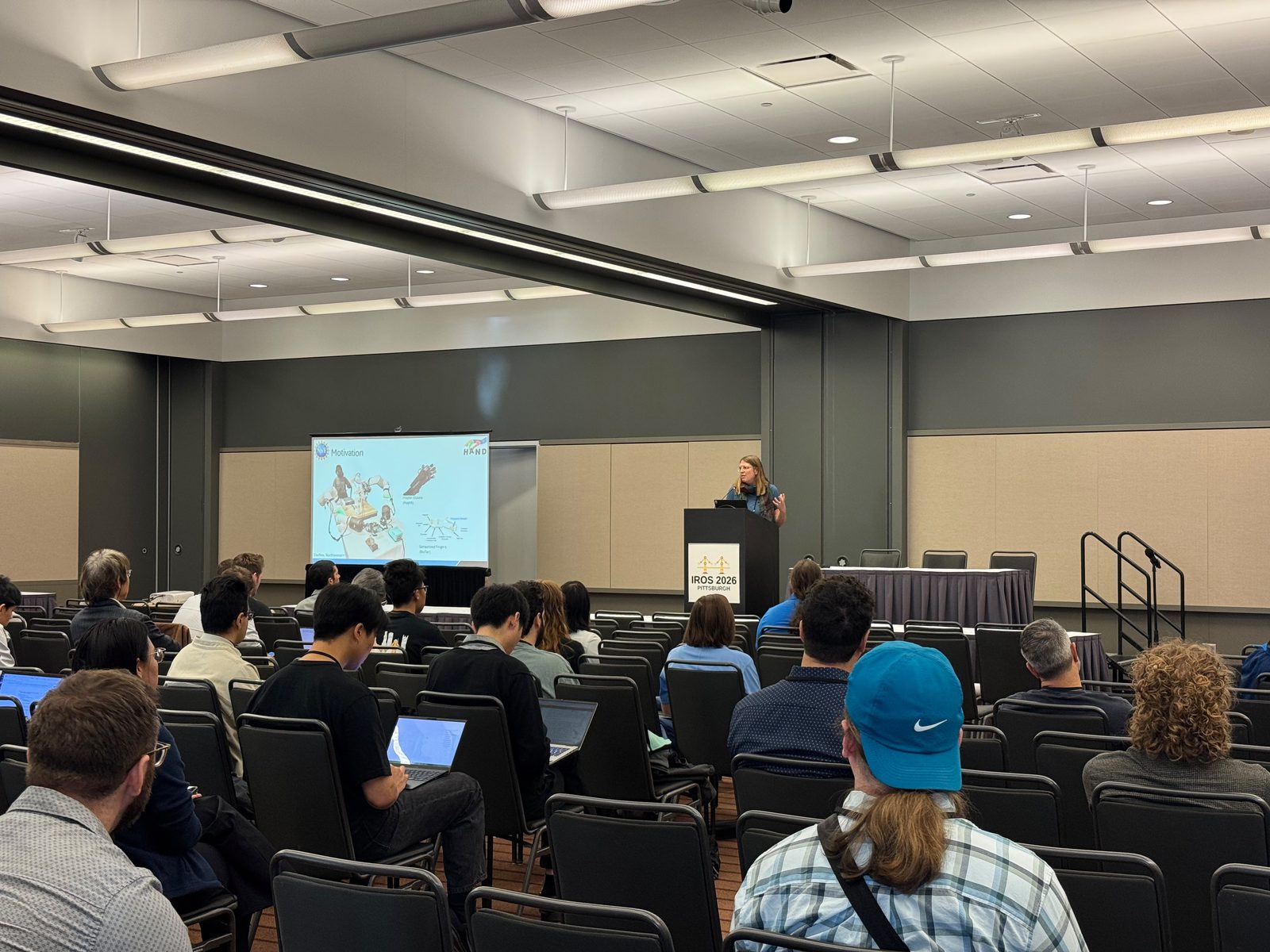
Session 1, Crossing Paths: Haptics and Dexterous Manipulation, moved from the neuroscience of human touch to tactile sensors, wearable haptic interfaces, and the hardware that could make remote touch feel real.
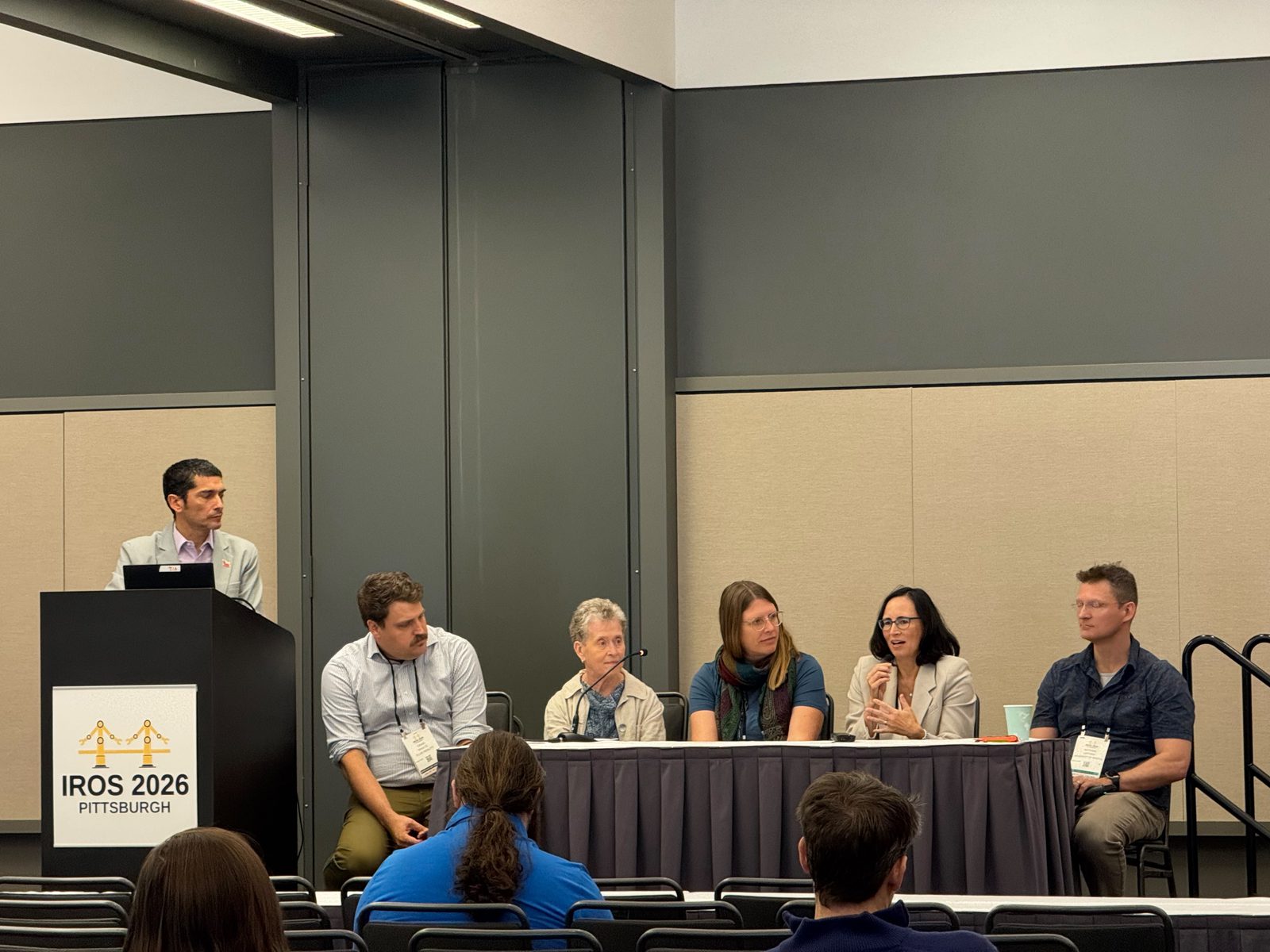
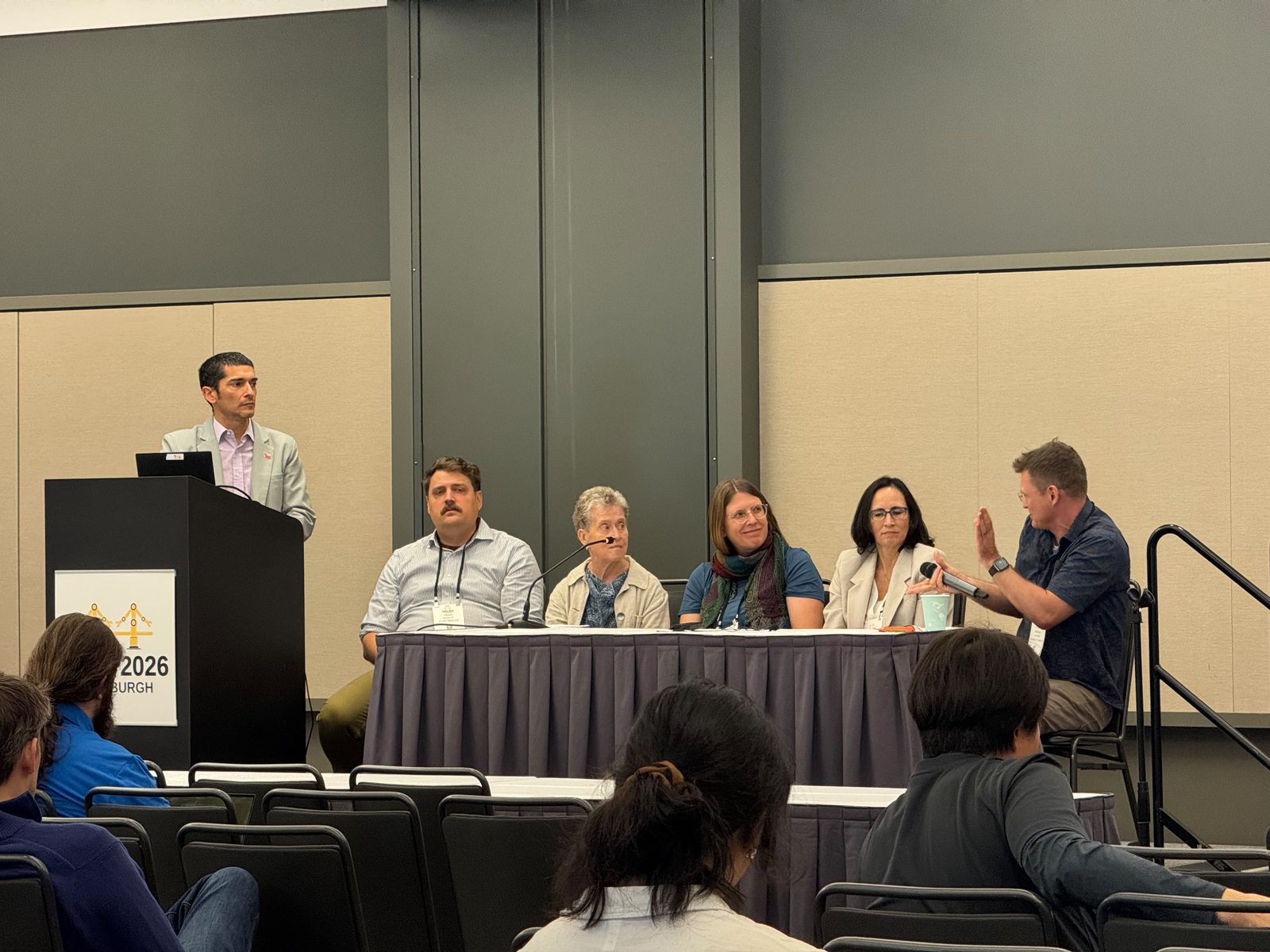
Round Table: Can We Enhance Dexterous Manipulation Through Haptics?
After the coffee break, all five speakers returned to the stage to take on the workshop's central question, with plenty of questions from the floor. A few threads ran through the whole conversation.
Audio and video engineers know which bandwidths people care about; for touch we still lack that model. The panel agreed that good enough is task-dependent, and that finding it may first take hardware that offers much more than good enough.
Robot-learning efforts gather plenty of joint and vision data but very little touch. Newer surgical robots can record instrument forces across many procedures, yet privacy rules keep that data out of researchers' reach.
Sensors report different quantities, and the same skin behaves differently on different hands. Ideas from the stage: benchmark against instrumented objects, or borrow psychometric-style tests to measure dexterity itself.
Flossing teeth, tying shoelaces, handling tiny objects, two-handed work without looking, and fast reactive skills like hitting a baseball: the challenges the panel would put to vision-only policies.
In their words
“We have this tendency to want to optimize and say less is more in some of these interfaces. But I still have the opinion that more is more. Visual displays have millions of pixels, and we’re trying to jam haptics through our entire distributed skin with a couple of actuators.”
Craig Shultz · Fluid Reality
“[Audio and displays] are really tractable problems, because we know what the signals look like… And then you go over to touch and you say, oops. Because we don’t have any of those things.”
Roberta Klatzky · Carnegie Mellon University
“Different companies are making different bets on the tactile sensor type to use… It might not matter too much which type of tactile sensor you’re using. Obviously, we’re all disagreeing and pitching our flags in the sand for specific types of technology.”
Nathan Lepora · University of Bristol
“If you can’t standardize across hands, you can standardize across an object hands can interact with. Maybe the hands are all reading out different readings from their own sensors, but if they’re doing the same thing to the object, then we can compare.”
Rebecca Friesen · Texas A&M University
“As someone who designs weird soft robots with all kinds of different shapes and materials, we’re proliferating chaos in a good way. We want that Cambrian explosion of robot designs, because that might help us discover really cool principles and approaches.”
Allison Okamura · Stanford University
Quotes are lightly edited for clarity from the session recording; brackets mark words added for context.
Poster Session
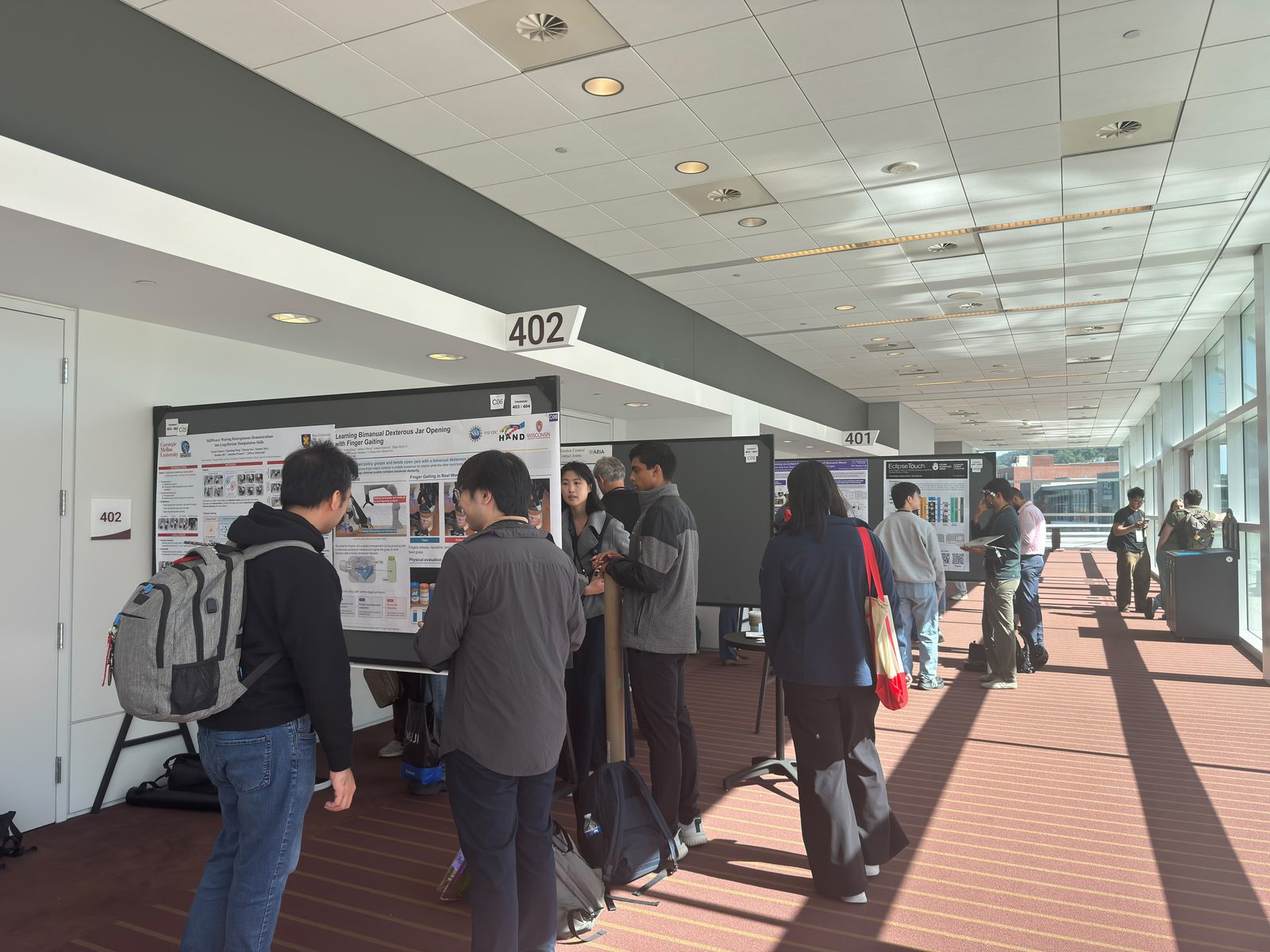
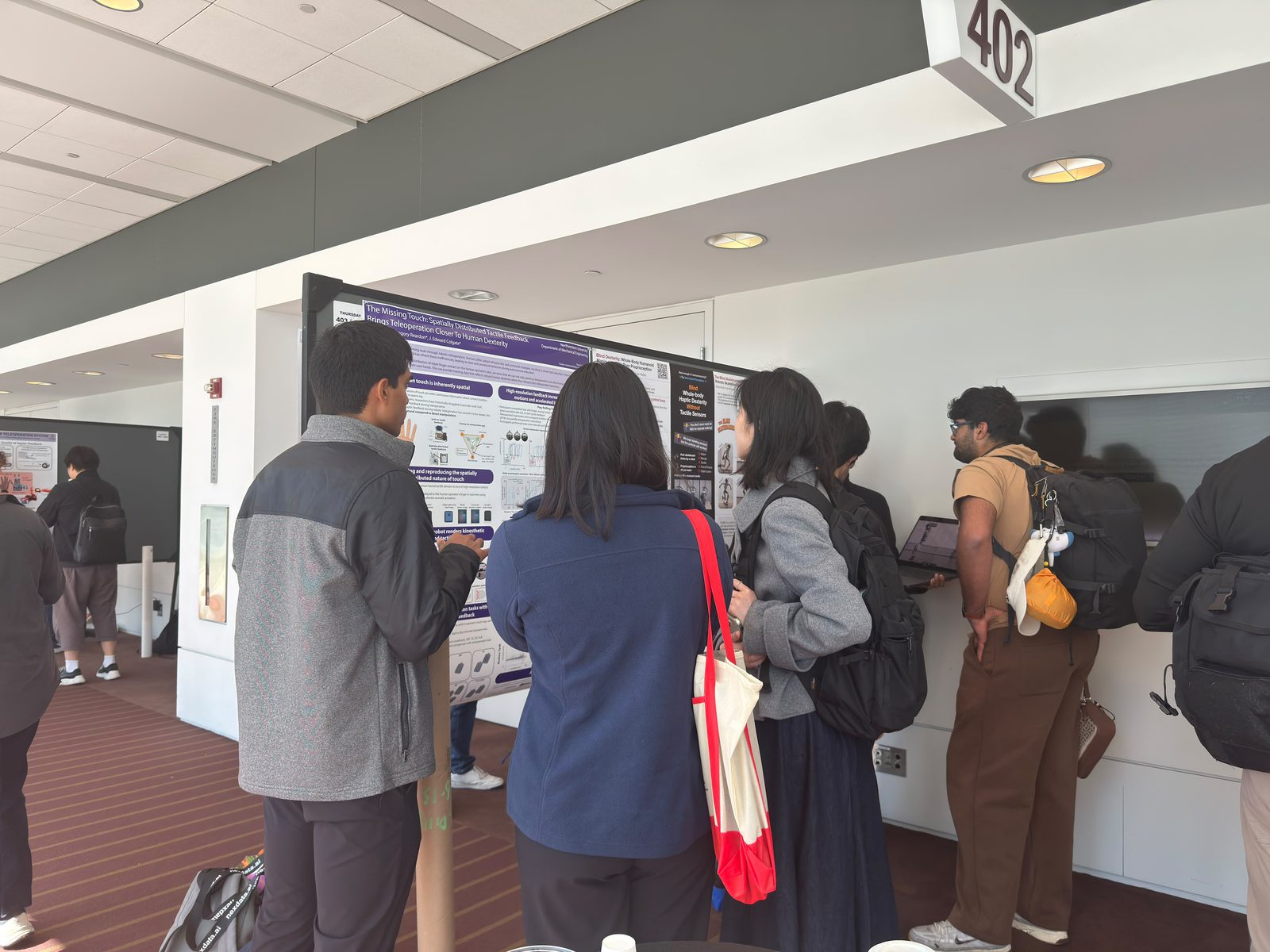
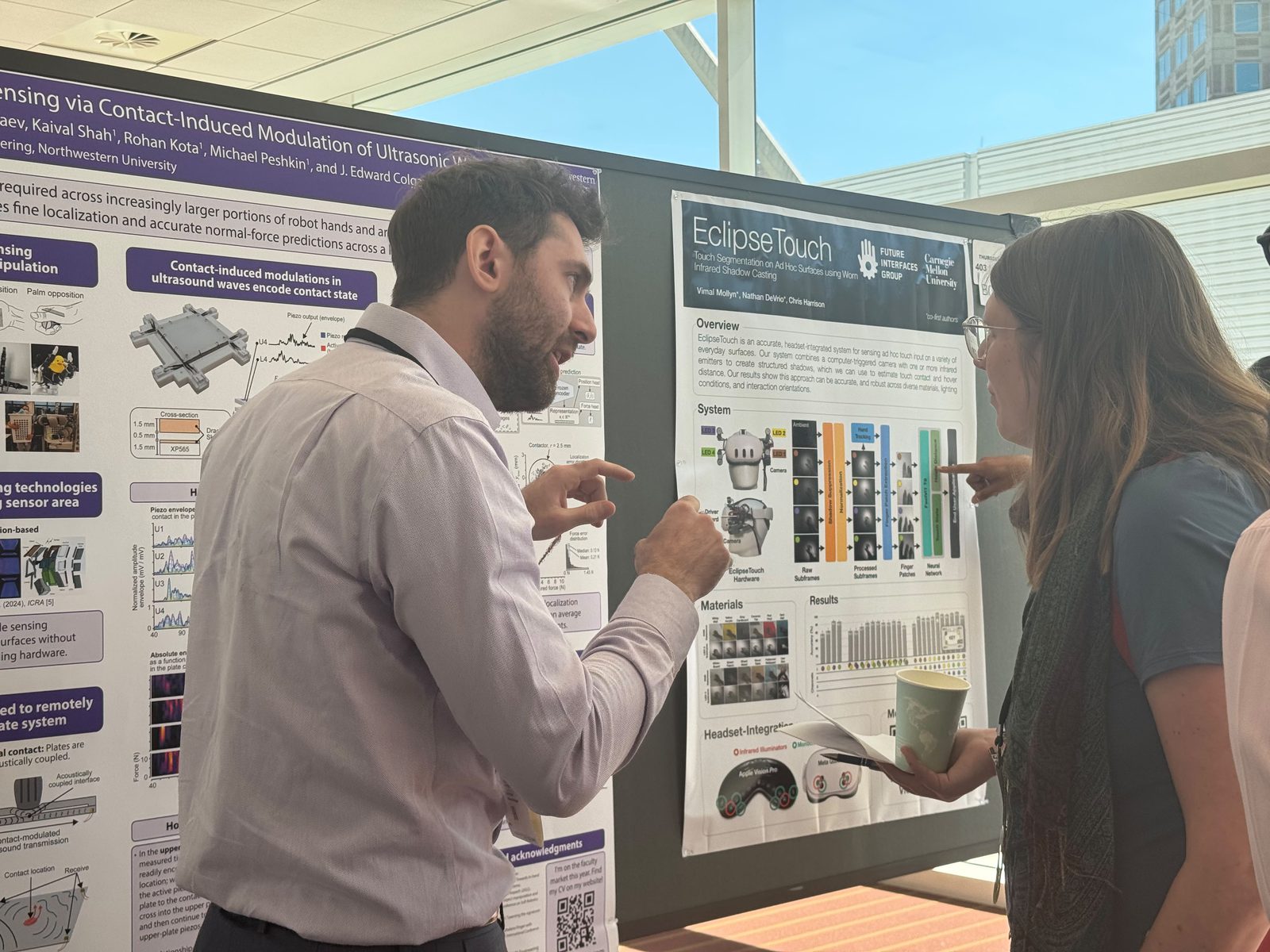
The morning closed with posters and networking in the corridor outside the workshop rooms, where presenters walked visitors through new tactile sensors, haptic interfaces, and learned manipulation policies.
Thank you to our five speakers, to every poster presenter, and to everyone who filled the room and stayed for the discussion. This workshop was supported by the HAND Engineering Research Center, the SHRED Lab at Carnegie Mellon, and MIT's Interactive Robotics Group. Questions or ideas for a follow-up? Write to us at hapticsworkshop@gmail.com.